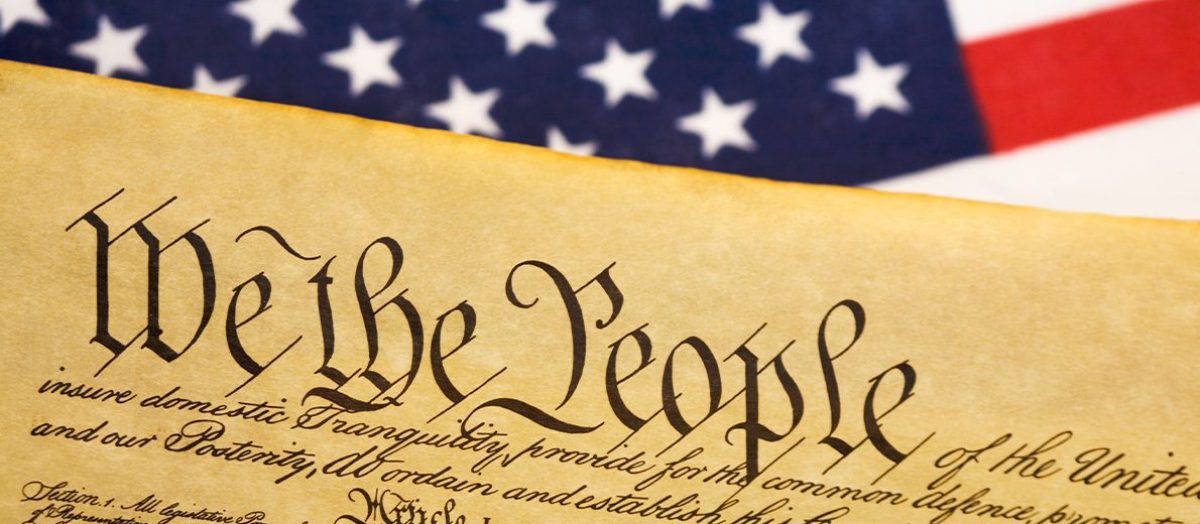
America at a Crossroads: The Growing Political Divide
There is no secret that partisan animosity and political conflict are on the rise in the United States. Despite widespread recognition of this growing divide, few concrete solutions have emerged to repair it. Researchers point to several contributing factors, including increasing negativity toward opposing political parties and the role of media coverage that disproportionately amplifies the most radical and extreme voices. As a result, the loudest politicians often receive the most attention, further distorting public perception and fueling division. Many scholars now believe that America stands at a critical crossroads.
Research on political data suggests that polarization in the United States began as early as the 1960s, with a sharp increase over the past two decades. Although Johanna Dunaway, Director of the Center for Democracy at Texas A&M University, notes that most citizens hold views closer to the political center, public perception tells a different story. Studies show that 72 percent of Republicans and 63 percent of Democrats believe the opposing party is “evil” or “immoral.” Researchers attribute this alarming mindset to politicians’ unwillingness to engage constructively with one another, as well as the constant stream of bipartisan attacks that dominate political discourse. As a consequence, elected officials increasingly abandon their responsibility to serve the American people, contributing to an environment where political hostility—and even violence—can thrive.
While researchers argue that actual policy differences between parties are often relatively narrow, the relentless negativity and attacks between opposing sides have deepened divisions among voters. This climate has also strengthened partisan loyalty, encouraging individuals to identify more strongly with their political party rather than with shared democratic values. At the same time, studies estimate that nearly two-thirds of Americans continue to support the foundational principles upon which the nation was built. However, researchers also argue that the current two-party system is fundamentally broken. Neither party can fully represent the wide range of voter perspectives, resulting in hyper-partisan politics that prioritize winning over governing. As a result, politicians often focus more on criticizing their opponents than on developing and debating meaningful policy solutions.
Unfortunately, there is no simple solution to America’s political divide. However, voters can take meaningful steps to promote change by educating themselves about candidates, the policies they support, and their broader vision for the country. Rather than aligning blindly with a political party, citizens must prioritize policies that uphold democratic principles and the nation’s founding values. As Stand Together emphasizes, “When citizens have responsible, balanced information, they can develop opinions based on where they stand—not where a politician tells them to stand” (standtogether.org). Only through informed and independent engagement can Americans begin to bridge the divide and restore trust in the democratic process.
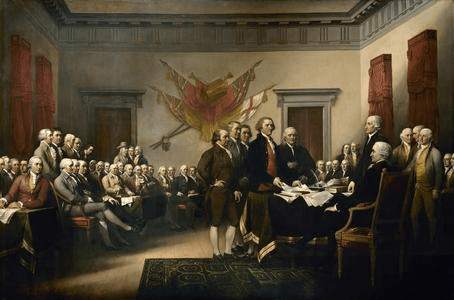
–Benjamin Franklin’s response to Elizabeth Willing Powel’s question: “Well, Doctor, what have we got, a republic or a monarchy?”
The Great Divide’: Understanding American Politics. (News.syr.edu/2025/10/23/the great divide) Diane Stirling Oct. 23, 2025
Divided We Stand; the rise in political animosity. (Knowable Magazine) Carl-Johan Karlsson 08.19.2024
What’s really driving political polarization — and what we can do to end it. (standtogether.org)
Key facts about partisanship and political animosity in America. (Pew Research Center). Carroll DohertyandJocelyn Kiley June 22, 2016
As Partisan Hostility Grows, Signs of Frustration With the Two-Party System. (Pew Research Center). August 9, 2022
How Hatred Came To Dominate American Politics. (fivethirtyeight.com) Lee Drutman Oct. 5, 2020
 We The People
You must be logged in to post a comment.